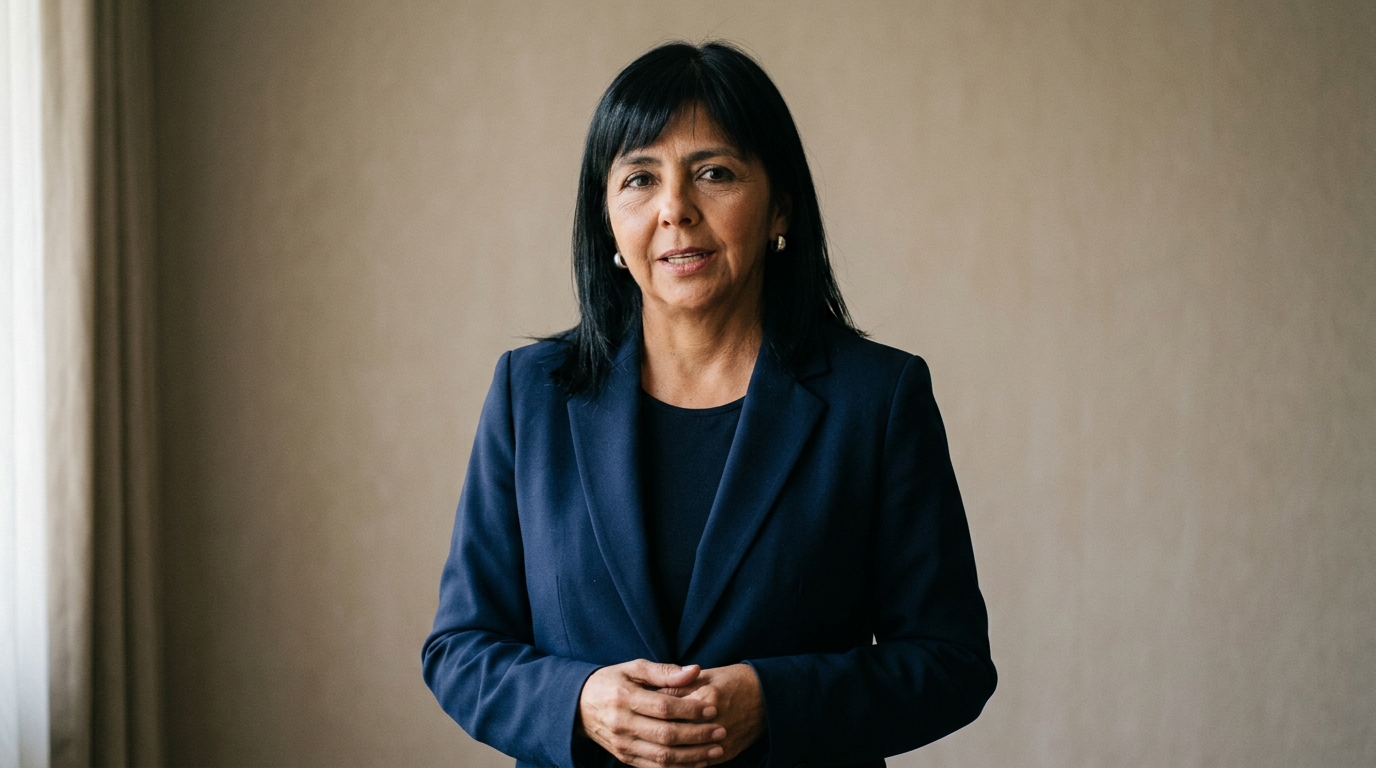
Mayda Hočevar, a professor of Philosophy of Law at the University of the Andes, founded the Observatory of Human Rights (ODH-ULA) in 2014 during protests.
She was forced into exile in Europe two years ago due to persecution by the Maduro government following the July 28, 2024 elections.
She conducted research at the University of York's Centre for Applied Human Rights on university repression in Venezuela (2014-2024).
Hočevar describes Venezuela's current situation as a structural crisis with institutional weakening, absence of rule of law, and closing civic space.
The claims, made testable
- asserted — check unavailable Mayda Hočevar, a professor of Philosophy of Law at the University of the Andes, founded the Observatory of Human Rights (ODH-ULA) in 2014 during protests. (evidence: not measured)
- asserted — check unavailable She was forced into exile in Europe two years ago due to persecution by the Maduro government following the July 28, 2024 elections. (evidence: not measured)
- asserted — check unavailable She conducted research at the University of York's Centre for Applied Human Rights on university repression in Venezuela (2014-2024). (evidence: not measured)
Pattern: 345 related Venezuela signals in the last 30 days on Human rights, Political persecution, Women's rights, Venezuelan crisis.
What would change the assessment
- Mayda Hočevar, a professor of Philosophy of Law at the University of the Andes, founded the Observatory of Human Rights (ODH-ULA) in 2014 during protests.
- She was forced into exile in Europe two years ago due to persecution by the Maduro government following the July 28, 2024 elections.
- She conducted research at the University of York's Centre for Applied Human Rights on university repression in Venezuela (2014-2024).
- Hočevar describes Venezuela's current situation as a structural crisis with institutional weakening, absence of rule of law, and closing civic space.
- She notes a turning point after January 3, 2026, with political prisoner releases and the return of the UN Human Rights Office, but sees no clear progress toward democratization or improved living conditions.
Grounded analysis — deterministic intelligence + AI synthesis anchored to real signals (deterministic + anchored gemma4:e2b). No fact is asserted that the sources do not support.
What the sources establish
The source makes the assertions summarized above; VeraVadis has not yet found independent corroboration in its corpus.
Actors named in sources
Mayda Hočevar · Universidad de Los Andes · Observatorio de Derechos Humanos de la Universidad de Los Andes (ODH-ULA) · Nicolás Maduro · University of York · Centre for Applied Human Rights · Alto Comisionado de las Naciones Unidas para los Derechos Humanos · Eslovenia
Click an actor to see other briefs that name it.
What's still unverified
- Everything above is one outlet's account; none of it has been independently corroborated yet.
AI-assisted synthesis anchored to a real VeraVadis-analyzed source. Cleared by VeraVadis's automated editorial gates on 2026-08-16 — not reviewed by a human editor. Archive piece: published under our earlier method. It does not carry the per-claim evidence chain — who reported it first and who is echoing whom — that our current pieces carry. The source link and the date are the original ones.