The AN sanctioned 11 laws in the first half of 2026, focusing on economic reactivation and foreign investment attraction.
The Ley de Amnistía para la Convivencia Democrática was passed but criticized for lack of transparency and selective application.
The Ley Orgánica para la Protección de los Derechos Socioeconómicos, aimed at protecting workers' salaries, was approved in first discussion but shelved.
Pending legislation includes laws on the national electric system, telecommunications, digital rights, and artificial intelligence.
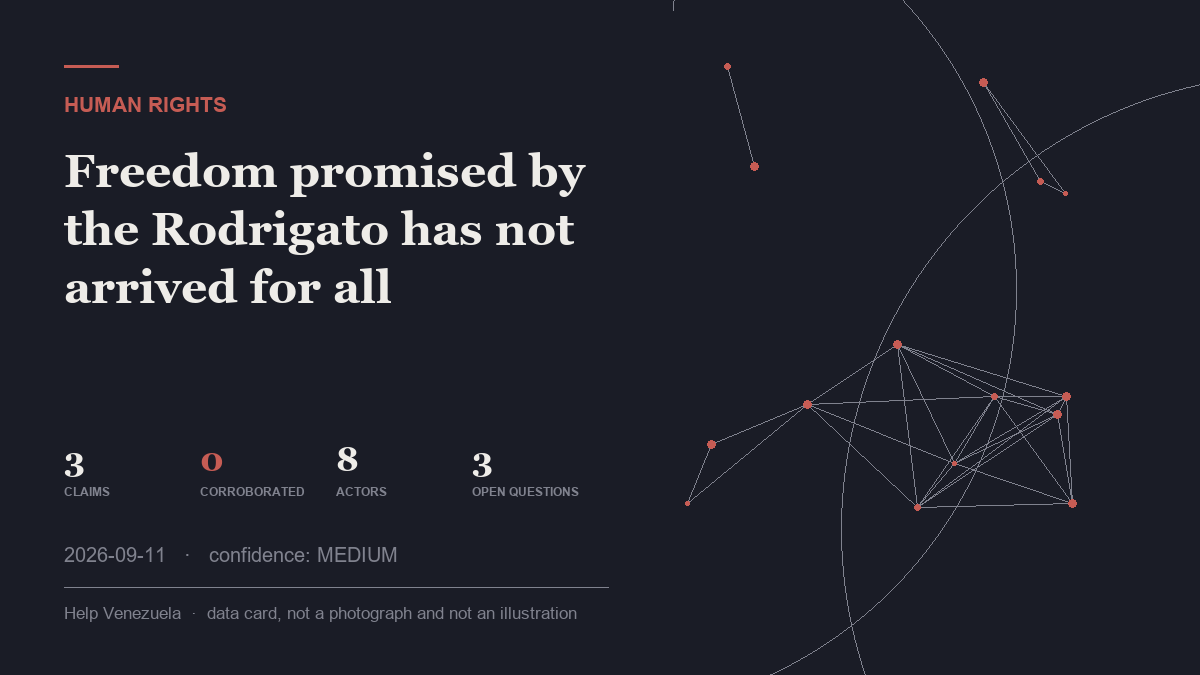
The first half of 2026 legislative record of the Asamblea Nacional (AN) presents a mixed picture: eleven laws were sanctioned, ostensibly aimed at economic reactivation and foreign investment, yet none of these claims are corroborated by independent evidence in our corpus. The source, Crónica Uno, is unclassified, meaning its reliability is not established, and the absence of corroboration for all three claims suggests they may be based on official statements or unverified reports. The emphasis on economic legislation aligns with the government's narrative of addressing urgent economic needs, but the lack of independent verification warrants caution.
The Ley de Amnistía para la Convivencia Democrática, passed but criticized for opacity and selectivity, signals a political maneuver rather than a genuine reconciliation effort. Its passage, if true, could be seen as an attempt to project democratic openness, but the criticism implies it may be used to target specific individuals while excluding others. Similarly, the Ley Orgánica para la Protección de los Derechos Socioeconómicos, approved in first discussion but shelved, suggests a gap between legislative intent and implementation, possibly due to economic constraints or political calculations. These actions, if confirmed, would indicate a legislature that is active on paper but limited in substantive impact.
The epistemic status of these claims is weak: all have zero corroborating evidence, and the source's unclassified profile means we cannot assess its bias or reliability. To strengthen the assessment, we would need official records from the AN, such as the gazette, or independent reporting from multiple outlets. The open questions provide falsifiable criteria: if the socio-economic law is not promulgated by end of 2026, or if no laws on the electric system or telecommunications are passed, the initial claims of economic focus would be undermined. Monitoring these indicators within 180 days would help clarify whether the AN's legislative agenda is truly prioritizing economic reactivation or if other issues dominate.
The claims, made testable
- asserted — check unavailable The AN sanctioned 11 laws in the first half of 2026, focusing on economic reactivation and foreign investment attraction. (evidence: not measured)
- asserted — check unavailable The Ley de Amnistía para la Convivencia Democrática was passed but criticized for lack of transparency and selective application. (evidence: not measured)
- asserted — check unavailable The Ley Orgánica para la Protección de los Derechos Socioeconómicos, aimed at protecting workers' salaries, was approved in first discussion but shelved. (evidence: not measured)
Pattern: 13 related Venezuela signals in the last 30 days on Legislative agenda, Economic reform, Political amnesty, Social policy.
What would change the assessment
- If the Ley Orgánica para la Protección de los Derechos Socioeconómicos is not promulgated by the end of 2026 (within 180 days — Asamblea Nacional official gazette or legislative records)
- If the AN does not pass any law on the national electric system or telecommunications by the end of 2026 (within 180 days — Asamblea Nacional official gazette or legislative records)
Grounded analysis — deterministic intelligence + AI synthesis anchored to real signals (deterministic + anchored deepseek-chat). No fact is asserted that the sources do not support.
What the sources establish
The source makes the assertions summarized above; VeraVadis has not yet found independent corroboration in its corpus.
Actors named in sources
Asamblea Nacional (AN) · Jorge Rodríguez · Nicolás Maduro · Delcy Rodríguez · Cilia Flores · Cicpc · Ley Orgánica de Hidrocarburos · Ley Orgánica de Minas
Click an actor to see other briefs that name it.
What's still unverified
- Everything above is one outlet's account; none of it has been independently corroborated yet.
AI-assisted synthesis anchored to a real VeraVadis-analyzed source. Cleared by VeraVadis's automated editorial gates on 2026-09-01 — not reviewed by a human editor. Archive piece: published under our earlier method. It does not carry the per-claim evidence chain — who reported it first and who is echoing whom — that our current pieces carry. The source link and the date are the original ones.