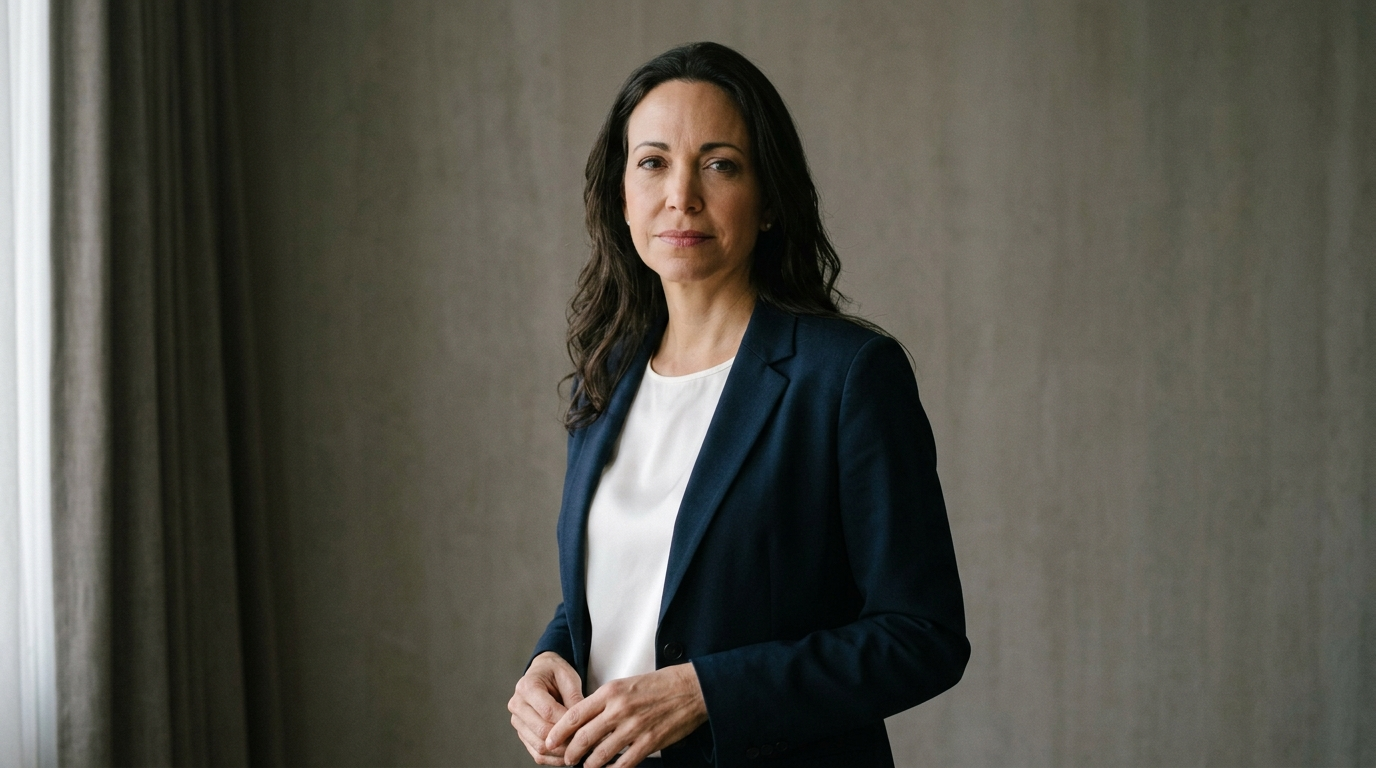
Machado cuestionó los detalles del acuerdo petrolero estadounidense-Venezuela, preguntando quién firma, qué está firmado, quién proporciona dinero y garantías, y cómo beneficia a los venezolanos.
Dijo que la inversión petrolera requiere la legitimidad y estabilidad de un gobierno democrático.
Machado presentó un plan energético de cinco pilares: marco jurídico transparente, institucionalismo técnico, licitación pública, régimen fiscal competitivo y seguridad jurídica con arbitraje internacional.
Hizo hincapié en que los recursos de Venezuela pertenecen al pueblo, no al régimen ilegítimo.
Análisis disponible en inglés — traducción revisada próximamente.
María Corina Machado's recent statements on the US-Venezuela oil agreement, as reported by Monitoreamos, constitute a significant political signal from the Venezuelan opposition. Her questioning of the agreement's details—who signs, what is signed, who provides money and guarantees, and how it benefits Venezuelans—reflects a cautious and conditional stance. This is not a blanket rejection but a demand for transparency and clarity, indicating that the opposition is not willing to accept any deal that lacks democratic legitimacy. The source, Monitoreamos, is unclassified, meaning its reliability is not established; thus, these claims should be treated as asserted rather than corroborated. No independent evidence in our corpus supports these statements, so their veracity remains unverified.
Machado's assertion that oil investment requires the legitimacy and stability of a democratic government frames the oil agreement within a broader political context. This is a strategic move to link economic issues with governance, suggesting that any sustainable solution must involve democratic institutions. Her five-pillar energy plan—transparent legal framework, technical institutionalism, public bidding, competitive fiscal regime, and legal security with international arbitration—offers a concrete alternative vision. This plan is notable for its emphasis on legal and institutional safeguards, which are typically absent under the current regime. The mention of international arbitration signals a desire to attract foreign investment by ensuring legal protections, a point that resonates with international stakeholders.
The epistemic status of these claims is weak due to the lack of corroboration. To strengthen the assessment, we would need direct quotes or official statements from Machado or her team, or coverage from multiple independent sources. Additionally, corroboration from Venezuelan media or international outlets would increase confidence. The open questions highlight Machado's emphasis on the people's ownership of resources and her call for a comprehensive reconstruction plan beyond oil, which suggests a broader political agenda. If these statements are confirmed, they would indicate a coordinated opposition strategy to challenge the government's handling of the oil sector and to position themselves as the legitimate alternative for international investment. However, without further evidence, these remain assertions that require careful monitoring.
The claims, made testable
- asserted — check unavailable Machado questioned the details of the US-Venezuela oil agreement, asking who signs, what is signed, who provides money and guarantees, and how it benefits Venezuelans. (evidence: not measured)
- asserted — check unavailable She stated that oil investment requires the legitimacy and stability of a democratic government. (evidence: not measured)
- asserted — check unavailable Machado presented a five-pillar energy plan: transparent legal framework, technical institutionalism, public bidding, competitive fiscal regime, and legal security with international arbitration. (evidence: not measured)
Pattern: 384 related Venezuela signals in the last 30 days on Oil agreement, Venezuelan opposition, Energy policy, Democratic legitimacy.
What would change the assessment
- Machado questioned the details of the US-Venezuela oil agreement, asking who signs, what is signed, who provides money and guarantees, and how it benefits Venezuelans.
- She stated that oil investment requires the legitimacy and stability of a democratic government.
- Machado presented a five-pillar energy plan: transparent legal framework, technical institutionalism, public bidding, competitive fiscal regime, and legal security with international arbitration.
- She emphasized that Venezuela's resources belong to the people, not the illegitimate regime.
- Machado called for a comprehensive reconstruction plan beyond oil, including education, technology, security, and financial infrastructure.
Grounded analysis — deterministic intelligence + AI synthesis anchored to real signals (deterministic + anchored deepseek-chat). No fact is asserted that the sources do not support.
Qué establecen las fuentes
La fuente afirma lo resumido anteriormente; VeraVadis todavía no encontró corroboración independiente en su corpus.
Actores nombrados en fuentes
María Corina Machado · Delcy Rodríguez · CERAWeek · Houston · Asamblea Nacional
Haga clic en un actor para ver otros informes que lo mencionen.
Lo que aún no se puede ver
- Todo lo anterior es el relato de un solo medio; nada está corroborado de forma independiente todavía.
Síntesis asistida por IA anclada a una fuente real analizada por VeraVadis. Aprobada por las compuertas editoriales automáticas de VeraVadis el 2026-09-11; no la revisó un editor humano. Pieza de archivo: se publicó con nuestro método anterior. No lleva la cadena de evidencia por afirmación —quién lo publicó primero y quién reproduce a quién— que sí llevan las piezas de hoy. El enlace a la fuente y la fecha son los originales.