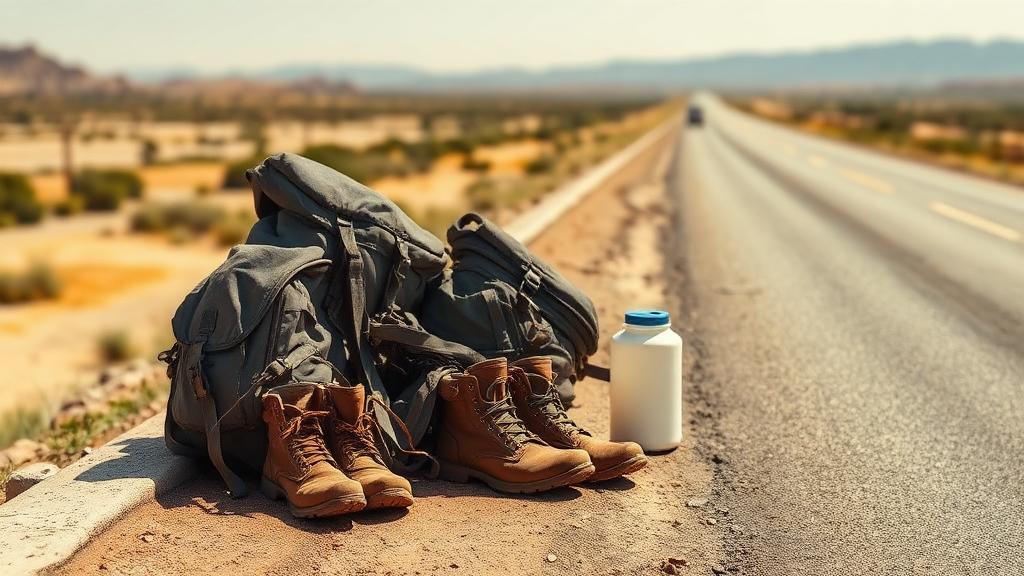
Santos Ferrer y su familia huyeron de Venezuela con cuatro maletas y tres gatos, llegando a Neuquén, Argentina.
Migraron por la crisis en Venezuela y la oportunidad de Vaca Muerta.
La pandemia los obligó a vivir en un pequeño apartamento y adaptarse a la vida virtual.
Santos studied at the Universidad del Comahue and his sisters finished high school in Argentina.
Análisis disponible en inglés — traducción revisada próximamente.
Source ecology
La Patilla · exile media · reliability C
Strongly anti-Maduro, opposition-aligned — Alberto Federico Ravell
- Clickbait tendencies
- Mixes opinion with news frequently
- Can amplify unverified rumors
The claims assert that this migration was motivated by the crisis in Venezuela and the opportunity presented by Vaca Muerta. These assertions are currently uncorroborated, as no evidence has been found within the corpus for either claim. The source, La Patilla, is categorized as exile media with a reliability rating of 'C', exhibiting tendencies toward clickbait and mixing opinion with news, which suggests that these claims should be treated as asserted rather than established facts. The source's strong anti-Maduro and opposition alignment implies a specific political framing for the narrative, suggesting that the focus on community solidarity and human interest is likely aligned with political messaging rather than purely objective reporting.
The entities mentioned—Santos Ferrer, Neuquén, Argentina, Venezuela, Vaca Muerta, Universidad del Comahue, and La Patilla—establish a geographical and biographical context for the claims. The narrative connects personal migration and professional life (e.g., Santos studying at the Universidad del Comahue) with current community engagement (donating blood). The lack of corroboration for the core claims regarding the reasons for migration or the specific details of the journey means that while the story touches upon topics like Venezuelan migration and community solidarity, it functions primarily as an anecdotal narrative framed by a politically aligned source. Evidence that would change this assessment would include official migration records, statements from Santos Ferrer, or verifiable documentation linking the family's movement to the Vaca Muerta opportunity or the Venezuelan crisis.
The claims, made testable
- asserted — check unavailable Santos Ferrer and his family fled Venezuela with four suitcases and three cats, arriving in Neuquén, Argentina. (evidence: not measured)
- asserted — check unavailable They migrated due to the crisis in Venezuela and the opportunity of Vaca Muerta. (evidence: not measured)
Pattern: 33 related Venezuela signals in the last 30 days on Venezuelan migration, Human interest, Community solidarity, Pandemic impact.
What would change the assessment
- Santos Ferrer and his family fled Venezuela with four suitcases and three cats, arriving in Neuquén, Argentina.
- They migrated due to the crisis in Venezuela and the opportunity of Vaca Muerta.
- The pandemic forced them to live in a small apartment and adapt to virtual life.
- Santos studied at the Universidad del Comahue and his sisters finished high school in Argentina.
- Now employed at 27, Santos donates blood, platelets, and bone marrow to give back to the community.
Grounded analysis — deterministic intelligence + AI synthesis anchored to real signals (deterministic + anchored gemma4:e2b). No fact is asserted that the sources do not support.
Qué establecen las fuentes
La fuente afirma lo resumido anteriormente; VeraVadis todavía no encontró corroboración independiente en su corpus.
Actores nombrados en fuentes
Santos Ferrer · Neuquén · Argentina · Vaca Muerta · Universidad del Comahue
Haga clic en un actor para ver otros informes que lo mencionen.
Lo que aún no se puede ver
- Todo lo anterior es el relato de un solo medio; nada está corroborado de forma independiente todavía.
Síntesis asistida por IA anclada a una fuente real analizada por VeraVadis. Aprobada por las compuertas editoriales automáticas de VeraVadis el 2026-08-09; no la revisó un editor humano. Pieza de archivo: se publicó con nuestro método anterior. No lleva la cadena de evidencia por afirmación —quién lo publicó primero y quién reproduce a quién— que sí llevan las piezas de hoy. El enlace a la fuente y la fecha son los originales.