J.D. Vance apoyó públicamente el pacto petrolero con Venezuela, afirmando que reducirá los precios del combustible y generará regalías para Estados Unidos.
El acuerdo es parte del plan de la administración Trump para mejorar la seguridad energética nacional y ampliar el suministro mundial de crudo.
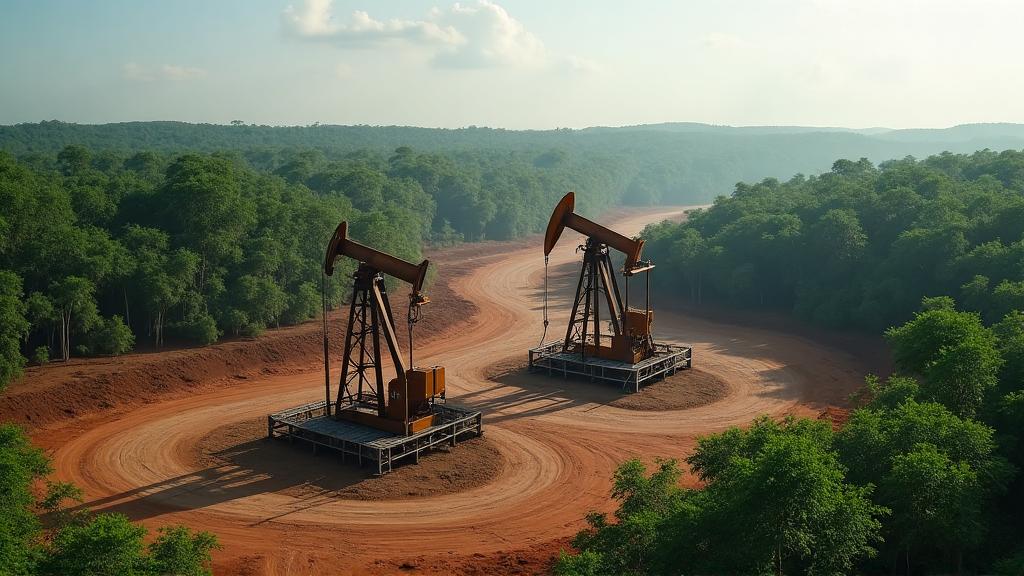
La estrategia implica que las empresas privadas estadounidenses incrementen la producción de petróleo en Venezuela para añadir más crudo al mercado internacional.
Vance criticó el uso del gobierno de Biden de la Reserva Estratégica del Petróleo para controlar precios, favoreciendo la diversificación de fuentes de suministro.
Análisis disponible en inglés — traducción revisada próximamente.
The statement by J.D. Vance, as reported by Contrapunto, asserts that the oil pact with Venezuela will lower fuel prices and generate royalties for the U.S., framing it as part of the Trump administration's energy security strategy. However, none of these claims have been corroborated by independent evidence in our corpus, and the source profile is unclassified, indicating a lack of established reliability. This suggests the information should be treated as an assertion from a political figure rather than a verified fact.
The claims align with a broader narrative of using U.S. private companies to increase Venezuelan oil production, which would expand global supply and potentially impact prices. Yet, the absence of corroboration and the political context—Vance being a prominent Republican—imply that these statements may serve to justify the administration's policy. The epistemic status is weak, as no contracts or price data are cited. To strengthen the assessment, we would need observable evidence such as a decrease in U.S. gasoline prices within 90 days or signed contracts by U.S. companies within 180 days, as outlined in the falsifiers.
Given the source's unclassified profile and the lack of corroboration, the claims should be viewed with caution. They represent a political endorsement rather than a confirmed outcome. Future evidence, such as official announcements from the White House or OFAC licenses, would be crucial to validate the production increase and price effects. Until then, the analysis remains speculative, and the claims should not be taken as established fact.
The claims, made testable
- asserted — check unavailable J.D. Vance publicly supported the oil pact with Venezuela, stating it will lower fuel prices and generate royalties for the U.S. (evidence: not measured)
- asserted — check unavailable The agreement is part of the Trump administration's plan to enhance national energy security and expand global crude supply. (evidence: not measured)
- asserted — check unavailable The strategy involves U.S. private companies increasing oil production in Venezuela to add more crude to the international market. (evidence: not measured)
Pattern: 330 related Venezuela signals in the last 30 days on Oil agreement, Energy security, U.S.-Venezuela relations, Fuel prices.
What would change the assessment
- If U.S. gasoline prices do not decrease within 90 days of the agreement's implementation, the claim of price reduction is weakened. (within 90 days — EIA gasoline price data)
- If no U.S. private companies sign contracts to operate in Venezuela's oil sector within 180 days, the production increase claim is unsupported. (within 180 days — OFAC licenses, company announcements)
Grounded analysis — deterministic intelligence + AI synthesis anchored to real signals (deterministic + anchored deepseek-chat). No fact is asserted that the sources do not support.
Qué establecen las fuentes
La fuente afirma lo resumido anteriormente; VeraVadis todavía no encontró corroboración independiente en su corpus.
Actores nombrados en fuentes
J.D. Vance · Donald Trump · Joe Biden · Casa Blanca · Strategic Petroleum Reserve
Haga clic en un actor para ver otros informes que lo mencionen.
Lo que aún no se puede ver
- Todo lo anterior es el relato de un solo medio; nada está corroborado de forma independiente todavía.
Síntesis asistida por IA anclada a una fuente real analizada por VeraVadis. Aprobada por las compuertas editoriales automáticas de VeraVadis el 2026-09-11; no la revisó un editor humano. Pieza de archivo: se publicó con nuestro método anterior. No lleva la cadena de evidencia por afirmación —quién lo publicó primero y quién reproduce a quién— que sí llevan las piezas de hoy. El enlace a la fuente y la fecha son los originales.