Vance defendió el acuerdo petrolero con Venezuela en una reunión informativa de prensa de la Casa Blanca, presentándolo como un escudo contra las crisis energéticas y las tensiones relacionadas con Irán.
El gobierno de Estados Unidos tiene una participación del 35% en la empresa creada para explotar activos petroleros venezolanos, con empresas privadas y empresario venezolano Alejandro Betancourt involucrados.
Vance afirmó que el acuerdo traería 65 mil millones de barriles de reservas a una explotación efectiva y reduciría la vulnerabilidad de los Estados Unidos a las perturbaciones energéticas mundiales.
Vance criticó a los aliados europeos, incluyendo a España, por su respuesta "rídica" a las amenazas iraníes contra las rutas marítimas.
Análisis disponible en inglés — traducción revisada próximamente.
The article from ABC España reports that Vice President J.D. Vance defended the US-Venezuela oil deal in a White House press briefing, framing it as a strategic measure to mitigate energy crises and reduce vulnerability to disruptions linked to Iran tensions. This claim is presented as a direct statement from Vance, but our corpus contains no corroborating evidence (evidence_count: 0), making it merely asserted rather than independently verified. The source, ABC España, is an unclassified general news outlet, which suggests moderate reliability but not specialized insight into US energy policy or internal administration deliberations. Thus, the claim should be treated as a policy signal from the administration, but its factual basis and strategic rationale require further confirmation.
The article also asserts that the US government holds a 35% stake in a company created to exploit Venezuelan oil assets, involving private US companies and Venezuelan businessman Alejandro Betancourt. This specific ownership detail is also uncorroborated (evidence_count: 0). Given the involvement of a foreign businessman and the complexity of such arrangements, this claim is particularly sensitive and would require official disclosures or credible financial reports to be accepted. The profile of the source does not lend additional weight to this assertion, so it remains an unverified detail that could be a misrepresentation or an accurate leak. The inclusion of Betancourt, who has been previously sanctioned by the US, adds a layer of complexity that warrants scrutiny.
Vance's further claim that the deal would bring 65 billion barrels of reserves into effective exploitation and reduce US vulnerability to global energy disruptions is also uncorroborated. This figure is significant and would represent a major shift in global oil markets if true, but without independent verification, it should be viewed as an administration talking point rather than a confirmed fact. The epistemic status of all three claims is low due to lack of corroboration. To strengthen the assessment, we would need official US government statements or financial disclosures confirming the 35% stake, evidence of US companies entering Venezuela (e.g., OFAC licenses), and independent verification of the reserve figure. Within 90 days, the ownership claim could be falsified if no such stake is disclosed; within a year, the implementation claim could be weakened if no corporate activity occurs. Until then, these claims should be treated as unverified assertions from a political source.
The claims, made testable
- asserted — check unavailable Vance defended the oil deal with Venezuela in a White House press briefing, presenting it as a shield against energy crises and Iran-related tensions. (evidence: not measured)
- asserted — check unavailable The US government holds a 35% stake in the company created to exploit Venezuelan oil assets, with private US companies and Venezuelan businessman Alejandro Betancourt involved. (evidence: not measured)
- asserted — check unavailable Vance claimed the deal would bring 65 billion barrels of reserves into effective exploitation and reduce US vulnerability to global energy disruptions. (evidence: not measured)
Pattern: 240 related Venezuela signals in the last 30 days on US-Venezuela oil deal, Energy security, Iran tensions, US foreign policy.
What would change the assessment
- If the US government does not hold a 35% stake in the Venezuelan oil company as described, the article's claim is false. (within 90 days — US government financial disclosures or official statements)
- If no US companies enter Venezuela to exploit oil reserves within the next year, the article's claim about the deal's implementation is weakened. (within 365 days — OFAC licenses, corporate announcements)
Grounded analysis — deterministic intelligence + AI synthesis anchored to real signals (deterministic + anchored deepseek-chat). No fact is asserted that the sources do not support.
Qué establecen las fuentes
La fuente afirma lo resumido anteriormente; VeraVadis todavía no encontró corroboración independiente en su corpus.
Actores nombrados en fuentes
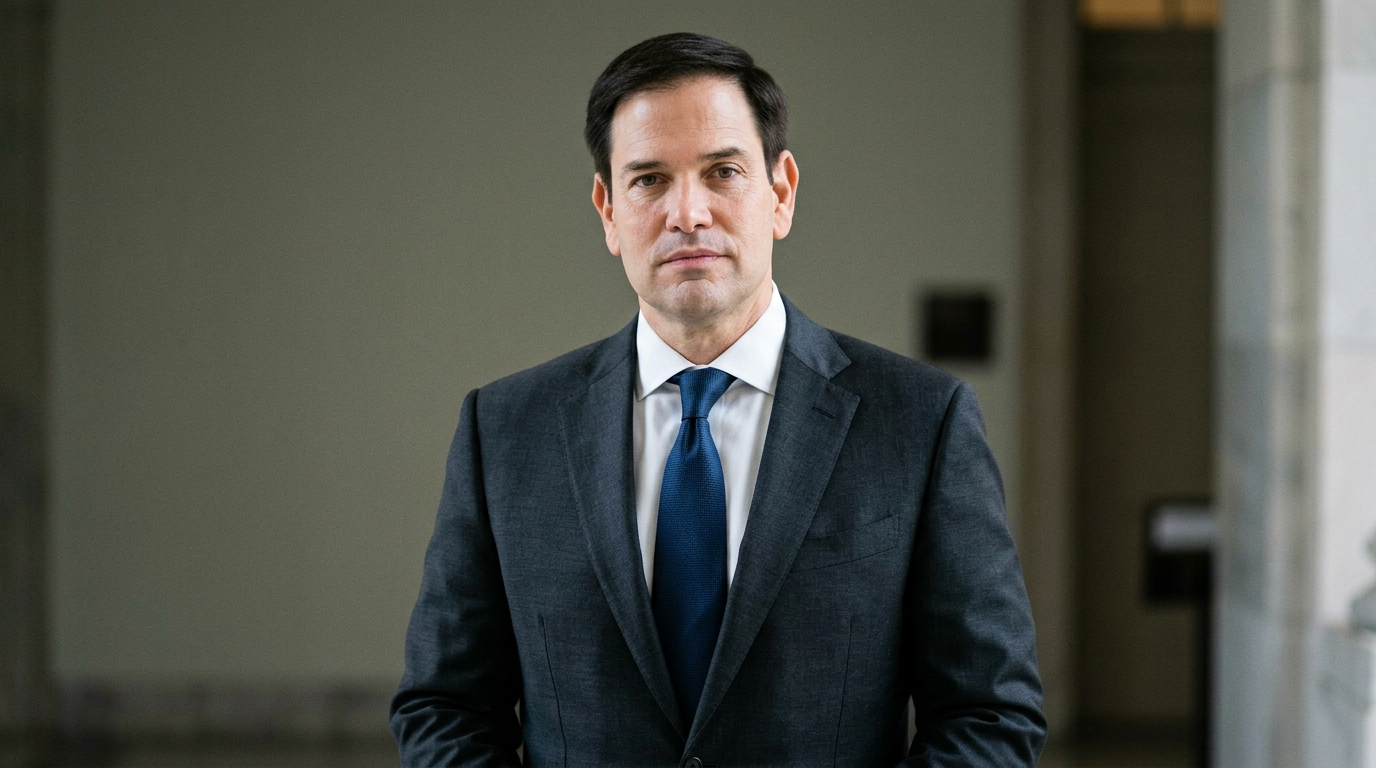
J.D. Vance · Donald Trump · Marco Rubio · Pete Hegseth · Karoline Leavitt · Alejandro Betancourt
Haga clic en un actor para ver otros informes que lo mencionen.
Lo que aún no se puede ver
- Todo lo anterior es el relato de un solo medio; nada está corroborado de forma independiente todavía.
Síntesis asistida por IA anclada a una fuente real analizada por VeraVadis. Aprobada por las compuertas editoriales automáticas de VeraVadis el 2026-09-09; no la revisó un editor humano. Pieza de archivo: se publicó con nuestro método anterior. No lleva la cadena de evidencia por afirmación —quién lo publicó primero y quién reproduce a quién— que sí llevan las piezas de hoy. El enlace a la fuente y la fecha son los originales.